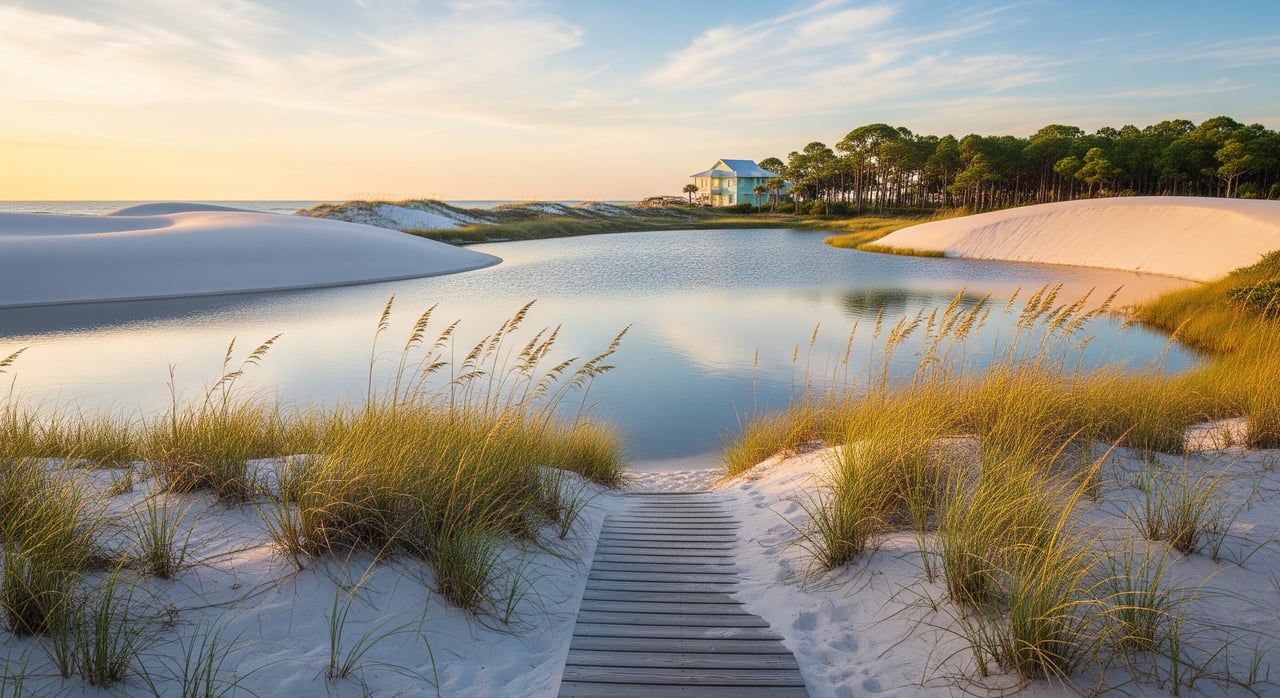
You have probably seen the mirror-still waters tucked behind the dunes along 30A and wondered what makes them so different. If you are exploring Seaside, WaterColor, or Grayton Beach, those quiet waters are part of a rare system that shapes both the landscape and your day-to-day life. In this guide, you will learn what coastal dune lakes are, why Western Lake is special, and how this natural feature can enhance your lifestyle and home search. Let’s dive in.
Coastal dune lakes explained
Coastal dune lakes are shallow lakes that sit just behind the beach dunes and occasionally connect to the Gulf. During closed periods, they behave more like freshwater lakes. After storms or natural breaches, seawater enters and the lake becomes brackish.
These lakes are internationally rare and are recognized along Florida’s Gulf Coast for their ecological value and scenic beauty. For you as a buyer or relocator, that mix of freshwater and salt influences the views, wildlife, and even neighborhood design around the shoreline.
How dune lakes form
Dune lakes develop where depressions behind the dunes intercept the water table and collect rainfall and runoff. Over time, the basin is fed by groundwater and small tributaries while dunes and shorelines hold the water in place.
Openings to the Gulf happen when high water, storms, or overwash cut through the sand. Those channels can close again as waves and wind rebuild the dunes. This natural cycle reshapes water levels, salinity, and clarity.
Seasonal behavior you can expect
Rain, drought, and storm events drive the rhythm of these lakes. When a lake is closed to the Gulf, salinity drops and the water acts more like a freshwater system. After a breach, seawater raises salinity and can flush nutrients, which often changes clarity and the mix of fish and invertebrates.
Sediments move in both directions. Runoff, overwash, and wind deliver sand and organic material, while open connections can also carry sediments back out. Transparency can vary with algae, suspended particles, and natural tannins.
Western Lake on 30A
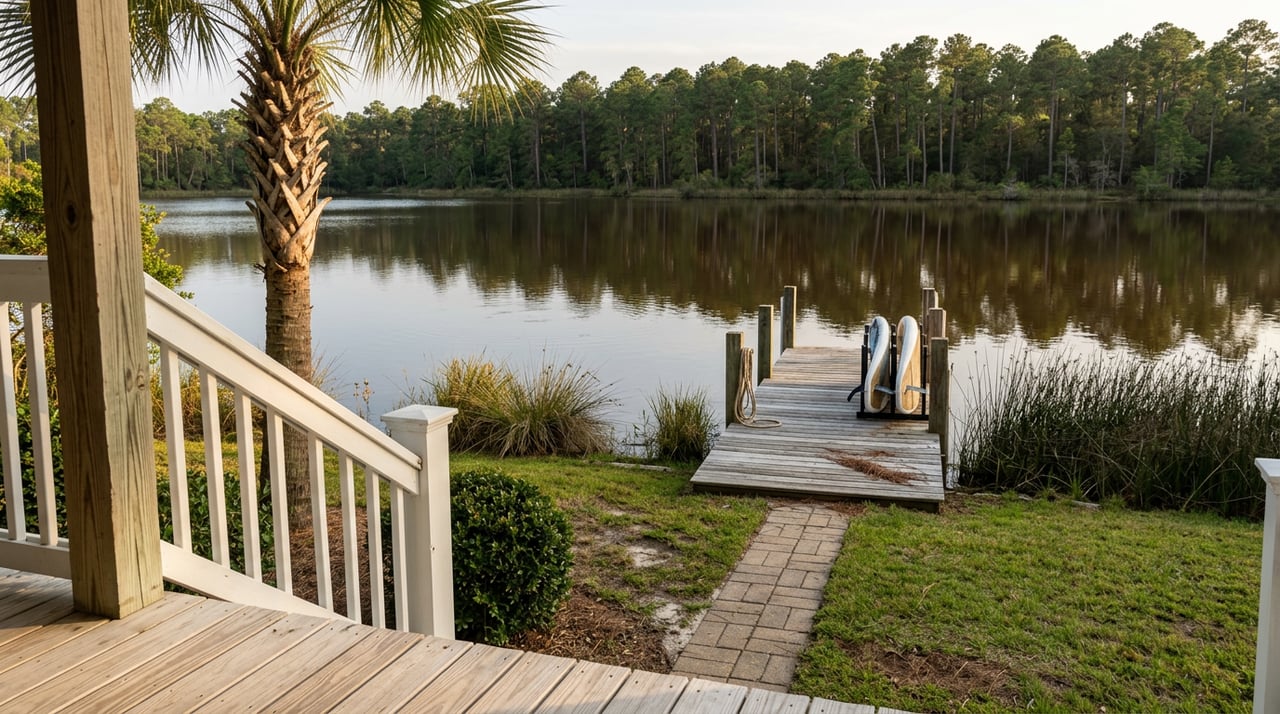
Western Lake sits within the WaterColor community near Seaside and Grayton Beach, and it serves as a visual and recreational centerpiece. Boardwalks, trails, and lakeside neighborhoods orient to the water, reflecting a design that embraces the outdoor lifestyle.
For many residents, the lake’s calm edges and long reflections define morning routines and sunset rituals. It is a signature landscape feature that helps set the tone for daily life along this part of 30A.
Everyday experiences
- Non-motorized boating: Kayaking and stand-up paddleboarding are popular on the sheltered waters. It is an easy way to explore shoreline vegetation and quiet coves.
- Birding and wildlife viewing: Lakeside trees and shrubs attract wading birds and songbirds, especially in the early morning. Fall and spring can bring noticeable migration activity.
- Fishing: Anglers may find freshwater species during closed periods and some brackish-tolerant species after a connection to the Gulf. Opportunities vary with salinity.
- Walking and photography: Sunrise and sunset are prime for reflections, soft color, and scenic boardwalk views.
Access and etiquette
Many amenities around Western Lake are community managed. Some launch points and trails are reserved for residents or guests. Before planning an outing, verify local rules and access, choose low-impact, non-motorized use, and give wildlife plenty of space.
Water depths can shift after heavy rain or storms. Stay aware of submerged hazards and changing currents during or after a breach event.
Wildlife to watch for
These lakes support both freshwater and estuarine life, which makes them small but diverse. You might spot great egrets, snowy egrets, or a great blue heron along the shoreline. Seasonal visitors can include sandpipers, plovers, and small dabbling ducks in cooler months.
Raptors sometimes perch in lakeside trees, and amphibians and reptiles use the shallow margins. What you see depends on the season and the lake’s connection to the Gulf.
Living near Western Lake
A home near a dune lake offers scenery and easy access to outdoor activities. Neighborhoods often incorporate green space, trails, and sightlines that celebrate the water. If you value paddling at first light or watching birds from your porch, this setting can be a powerful lifestyle match.
Shoreline homes may have unique considerations. Communities can apply setbacks, buffers, or rules for launches and docks to protect the lake’s health. Be sure to understand community-specific guidelines before you make an offer.
Buyer checklist
- Ask the seller or HOA about shoreline setbacks and vegetation buffers.
- Confirm rules for private docks, shared launches, or storage for small craft.
- Review flood maps and community plans for stormwater and overwash response.
- Clarify riparian rights and permitted uses on or near the lake.
- Understand how access and parking work for residents and guests.
Stewardship and protections
The health of a dune lake can be sensitive to human activity. Nutrient runoff from landscaping, septic systems, or stormwater can feed algae and reduce clarity. Shoreline hardening and other alterations can change how and when the lake connects to the Gulf.
Sea-level rise and stronger storms may increase overwash and saltwater intrusion over time. Invasive species can also affect habitat and water quality. State agencies, county planners, and conservation groups are active in monitoring, permitting, and restoration across northwest Florida.
Small choices at home make a difference. Use low-nutrient landscaping, maintain natural shoreline buffers, minimize fertilizer, and keep septic systems in good shape. Supporting local monitoring and conservation programs helps maintain the lake you love.
Photo and drone tips
Western Lake lends itself to visual storytelling. Golden hour often brings calm water and warm color, which is ideal for reflections and lifestyle shots. Including a kayaker or birder in the frame helps convey scale and experience.
If you plan to use a drone, follow FAA rules for recreational or commercial flying, keep visual line of sight, and stay below 400 feet. Commercial shoots typically require a Part 107 Remote Pilot Certificate. Many state parks restrict drone flights without a permit, and homeowners associations or private properties can limit operations over common areas.
Always secure the right permissions, respect privacy, and avoid flying near birds. This protects sensitive wildlife and keeps you in compliance with local and park regulations.
Is this lifestyle for you?
If you want a place where morning paddles, bird calls, and lake-to-dune vistas are part of the rhythm of your day, Western Lake is hard to beat. The setting is calm yet dynamic, with seasonal changes that keep the landscape interesting. For many buyers, that blend of beauty and access is exactly what a 30A home should deliver.
When you are ready to align a property with the lake-centered life you want, reach out. Contact Rachel Hutchings to discover your beach life and schedule a consultation.
FAQs
Are dune lakes freshwater on 30A?
- They cycle between freshwater and brackish conditions depending on rainfall, storm events, and whether the lake is open or closed to the Gulf.
Will Western Lake flood nearby properties?
- Water levels respond to heavy rain and coastal overwash. Review flood maps, community measures, and HOA shoreline management rules for any home you consider.
Can I build a private dock on Western Lake?
- It depends on ownership, permits, and community rules. Many neighborhoods restrict permanent private docks on dune lakes to protect shoreline habitat.
Are 30A dune lakes protected by regulations?
- Yes, state and local agencies regulate activities that affect dune lakes, and conservation groups support monitoring and restoration. Protection levels vary by location.
Will sea-level rise affect Western Lake over time?
- Higher seas and stronger storms can increase overwash and saltwater intrusion. Long-term effects depend on shoreline elevation and dune integrity.