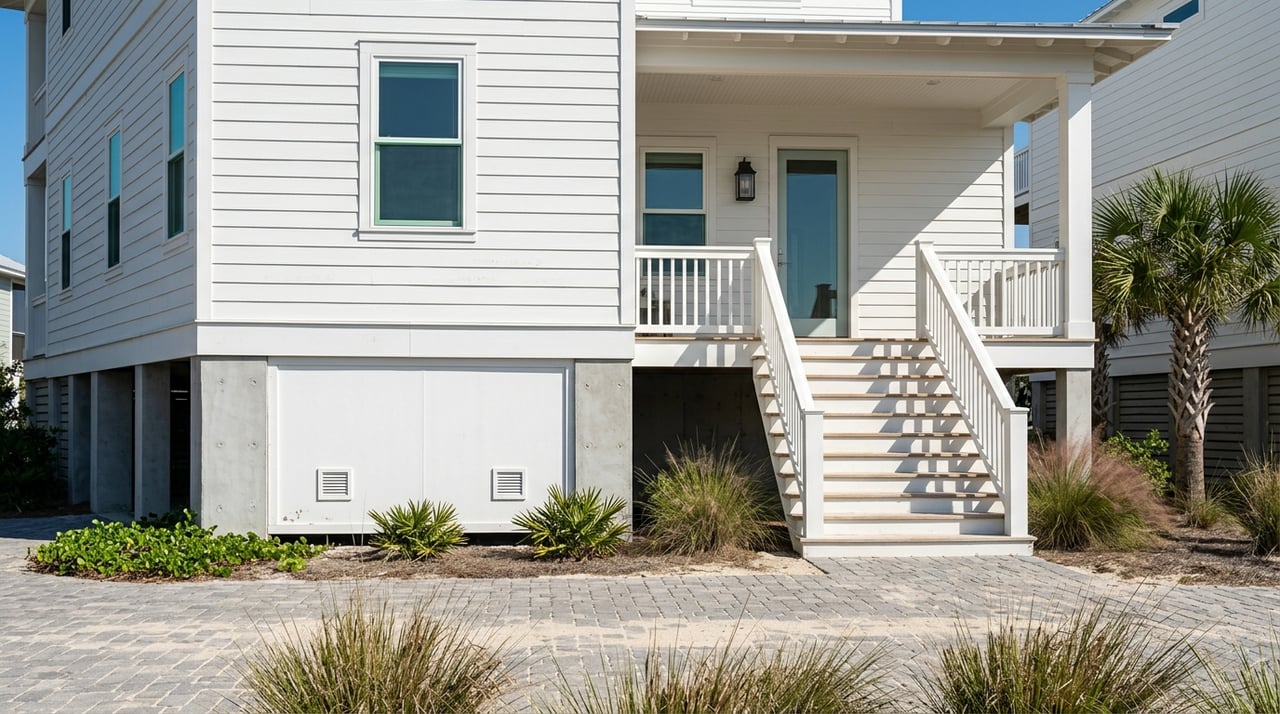
If you are dreaming about a home near the Gulf in Seacrest, Seagrove, or Watersound, insurance can feel like one of the least glamorous parts of the process. But in coastal Walton County, understanding flood and wind coverage early can save you money, reduce closing stress, and help you make a smarter purchase. Here’s what you need to know before you fall in love with the porch, the view, and the beach access. Let’s dive in.
Why coastal insurance works differently
In South Walton, insurance is not one-size-fits-all. Two homes on the same street can have different flood zones, different elevation requirements, and different insurance costs depending on the exact parcel and how the structure was built.
That is why the property address matters so much. Walton County says its South Walton Flood Insurance Rate Map became effective on December 30, 2020, and the county’s Floodplain Management office can help with address-level map determinations. Before you buy, it is worth confirming the flood zone for the exact property instead of relying on a general neighborhood assumption.
Flood insurance basics for Seacrest buyers
A standard homeowners policy does not cover flood damage. According to Florida’s insurance regulator, flood coverage is separate from homeowners insurance, even though a coastal storm can create both wind damage and flood damage in the same event. FEMA’s definition of flood can include storm surge, coastal flooding, and runoff from heavy rain, which is why this distinction matters so much near the beach.
Flood insurance may cover the building, the contents, or both. That means the right policy setup depends on whether you are buying a full-time residence, a second home, or a condo you plan to keep furnished for personal use and guests.
When flood insurance is required
If the property is in a Special Flood Hazard Area and you are using a mortgage from a federally regulated or insured lender, flood insurance is required. Even outside higher-risk zones, Florida notes that flood coverage is still recommended, and some lenders may still require it.
If you think a property may have been placed in the wrong flood zone, FEMA says owners can pursue a formal determination or a Letter of Map Change through the FEMA Map Service Center. That does not mean every mapped property is incorrect, but it does mean there is a formal process if a question comes up.
Why the flood zone matters
Walton County identifies several flood zones, including A, AE, AH, AO, V, and VE. For coastal buyers, one of the most important distinctions is between AE zones and VE zones.
According to Walton County’s FEMA flood zone guide, VE zones include additional wave-action risk, while AE zones are mapped with a base flood elevation. In simple terms, the closer a home is to coastal hazard exposure, the more closely building requirements and insurance underwriting tend to be reviewed.
Building rules can affect insurance
Insurance and construction are closely connected in coastal markets. Walton County requires permit review and elevation compliance for new construction or major work in a special flood hazard area.
The county says that in AE zones, living space must be at least 1 foot above base flood elevation. In VE and Coastal A zones, the lowest horizontal structural member must be 1 foot above base flood elevation, and only breakaway walls are allowed below that level, according to the county’s building requirements for flood hazard areas.
For buyers, this matters because elevation, compliance, and coastal construction details can influence both insurability and premium pricing. Walton County also notes that permit applications submitted after December 31, 2023 must follow the 2023 Florida Building Code, with separate requirements for coastal building zones, wind-borne-debris regions, and properties seaward of the Coastal Construction Control Line.
Flood coverage timing matters
One of the biggest mistakes buyers make is waiting too long to think about flood insurance. Florida’s consumer guidance says flood insurance usually has a 30-day waiting period before coverage starts.
That means you should not wait until the week of closing or the first named storm in the Gulf. It is especially important in Florida because insurers may stop accepting new applications or coverage increases once a tropical storm or hurricane watch or warning is issued anywhere in the state.
What wind insurance usually covers
Wind and flood are often talked about together, but they are not the same thing. Florida’s consumer guidance explains that homeowners coverage generally includes windstorms and hail, while flood remains excluded.
For many Seacrest-area buyers, the practical takeaway is simple. Wind damage may be covered through the homeowners policy, but storm surge and rising water require separate flood insurance.
Understand the hurricane deductible
If you are comparing insurance quotes, pay close attention to the hurricane deductible. In Florida, that deductible is often a percentage of the dwelling coverage amount rather than a flat dollar amount.
Florida’s consumer guide says hurricane deductibles are typically 2%, 5%, or 10% of the insured dwelling amount. It also explains that when the hurricane deductible applies, the ordinary deductible does not stack on top of it for the same loss.
A percentage deductible can create a much larger out-of-pocket cost than buyers expect. For that reason, it is smart to ask for a clear explanation of how the deductible works before closing.
Wind mitigation can lower costs
Florida requires insurers to offer premium discounts for hurricane-loss mitigation features. These may include construction and protective features that make a home more resilient in a wind event.
The insurer must provide a Wind Mitigation Notice of Premium Discount form with new policies and renewals, and a qualified inspector documents eligible features on the Uniform Mitigation Verification Inspection Form. In real terms, buyers should ask whether the home already has a wind mitigation report and whether any available credits have already been applied.
Condo insurance has a common gap
If you are buying a condo in Seagrove, Seacrest, or Watersound, do not assume the association’s master policy covers everything. Florida’s consumer guide says condo owners usually need an HO-6 policy, which mainly covers the unit interior, personal property, liability, and loss assessment.
The association’s master policy generally covers the exterior and common elements. Florida also says associations must use best efforts to maintain adequate property insurance, and state law allows associations to obtain flood insurance for common elements, association property, and units.
That sounds reassuring, but there is still a frequent gap. Your HO-6 policy remains important for interior finishes, belongings, liability exposure, and assessment risk, and it does not replace separate flood coverage if the unit is exposed to coastal flooding or storm surge.
A local flood discount may apply
Walton County participates in FEMA’s Community Rating System as a Class 6 community. According to the county, that provides a 20% discount on new or renewing flood insurance policies for properties in the Special Flood Hazard Area.
That does not mean every policy will look the same, but it is a meaningful local factor to keep in mind when budgeting for ownership in South Walton. It is another reason to get property-specific insurance information instead of guessing based on a broad coastal label.
Questions to ask before closing
Before you move forward on a beach-area purchase, ask direct questions and get answers in writing when possible. A few smart questions up front can prevent expensive surprises later.
Here is a practical checklist based on Walton County and Florida guidance:
- What is the exact flood zone for this parcel?
- Is flood insurance required by the lender?
- What is the hurricane deductible, and is it 2%, 5%, or 10%?
- Has a wind mitigation inspection been completed?
- Have premium credits already been applied?
- Is there an elevation certificate or V-zone certificate if the property is in a coastal hazard area?
- If it is a condo, what does the association master policy cover?
- Does the association carry any flood coverage for the building or common elements?
Why this matters for your beach life
Coastal ownership should feel exciting, not confusing. When you understand how flood zones, wind coverage, deductibles, and condo policies fit together, you can focus on the part that brought you here in the first place: finding the right home for sunset walks, long porch mornings, and easy days near the water.
At Love My Beach Life, we believe smart coastal buying starts with clear local guidance. If you are weighing homes in Seacrest, Seagrove, or Watersound and want help asking the right questions before you buy, connect with Rachel Hutchings for thoughtful, lifestyle-first guidance tailored to beachside ownership.
FAQs
What does flood insurance cover for a coastal home in Seacrest or nearby?
- Flood insurance is separate from homeowners insurance and may cover the structure, the contents, or both. FEMA says flood losses can include storm surge, coastal flooding, and runoff from heavy rain.
Is flood insurance required for all homes in Seagrove and Watersound?
- No. Flood insurance is generally required when a property is in a Special Flood Hazard Area and the buyer has a mortgage from a federally regulated or insured lender, though some lenders may also require it outside high-risk zones.
What is the difference between wind insurance and flood insurance in Walton County?
- Homeowners insurance generally includes windstorm and hail coverage, while flood damage is excluded and requires a separate flood policy.
How do hurricane deductibles work for coastal homes in Florida?
- Hurricane deductibles are often a percentage of the dwelling coverage amount, commonly 2%, 5%, or 10%, rather than a flat dollar amount.
Do condo buyers in Seacrest need their own insurance policy?
- Yes. Florida guidance says condo owners usually need an HO-6 policy for interior coverage, personal property, liability, and loss assessment, even when the association has a master policy.
Can flood insurance premiums be lower in Walton County?
- Possibly. Walton County says its participation in FEMA’s Community Rating System as a Class 6 community provides a 20% discount on new or renewing flood policies for properties in the Special Flood Hazard Area.
How early should buyers arrange flood insurance in South Walton?
- Early. Florida consumer guidance says flood insurance usually has a 30-day waiting period before coverage starts, so it is best to address coverage well before closing or storm season.